11 creative ways to earn side income as a software developer 💡💰
Smart developers don’t rely on a single source of income. Eleven practical ways to earn extra as a developer without clashing with your job.
Read this article in Arabic

Smart developers never rely on a single source of income.
Adding a side income can look hard at first, but for developers it is easier than you might think.
Here are 11 practical ways to earn extra income as a developer without clashing with your job.
They can help you build both sustainable and passive income.
1. Write technical articles as a guest author. Many companies pay guest writers to publish on their blogs.
All you need is the ability to write about a product or service, tutorials, or other ideas.
The work is remote, the pay is good, and you reach more people, which grows your network and brings future work.
If you are still trying to get accepted into these programs, start by writing articles on platforms such as DEV, DevDojo, Medium or Hackernoon. It improves your writing and shows your knowledge to potential companies.
A good place to start is whopaystechnicalwriters, which lists content agencies, publications and writer programs.
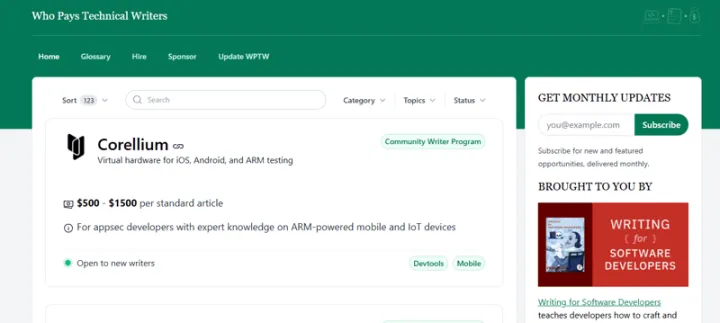
Other sites you can start with, and what they may pay per article:
- Airbyte – $900
- CircleCI – $350–$600
- DigitalOcean – $400
- Linode – $400
- AppSignal – $300
- Auth0 – $450
- Corellium – $500–$1,500
- LambdaTest – $200
- Tutorialspoint – $500
2. Join hackathons. There’s no guarantee you’ll win, but you can build something useful for the future.
At worst, you end up with a project or a project idea, which can lead to better opportunities.
Coding competitions run remotely all the time, usually sponsored by companies that offer cash prizes and sometimes incubation for ideas.
Good places to find hackathons:
- MLH Global Hackathons – the best place for remote and in-person hackathons.
- Devpost – prizes up to $170K.
- DEV challenges – small challenges where you build projects in public with others.
- Devfolio – another great place for hackathons, with a program that connects talented developers with startups.
Hackathons are a great way to meet new people and learn new things, and honestly they are a lot of fun!
At university and early in my career, I took part in dozens of competitions online and offline.
3. Create digital products. Building and selling digital products such as website templates, plugins or courses can bring good side income.
They need little maintenance, and you can keep selling them in the future.
The only thing you need is to create value the market wants, and to market it well.
Popular platforms for selling digital products:
- Gumroad – a strong platform that includes email subscriptions (10% flat fee).
- Creative Market – for design assets and templates.
- AppSumo – code, apps, plugins, templates and courses.
- ThemeForest – for WordPress and website themes; you become an author on Envato Market.
This can be hard because you need to find the right market, but the more value you offer, the more people will care about your product and buy it.
4. Build a SaaS. This is my favorite on the list, for obvious reasons and from past experience.
Building Software as a Service can be very rewarding, financially and professionally.
🎯 What is “indie hacking”? Building and selling a product on your own, without backing from a company or a large team.
Indie hacking can be challenging because you do everything yourself.
Well-known indie developers such as Tibo and Marc have earned more than a million dollars. Believe me, it is the best way to grow, but you need a long-term mindset and real work on the service idea you choose.
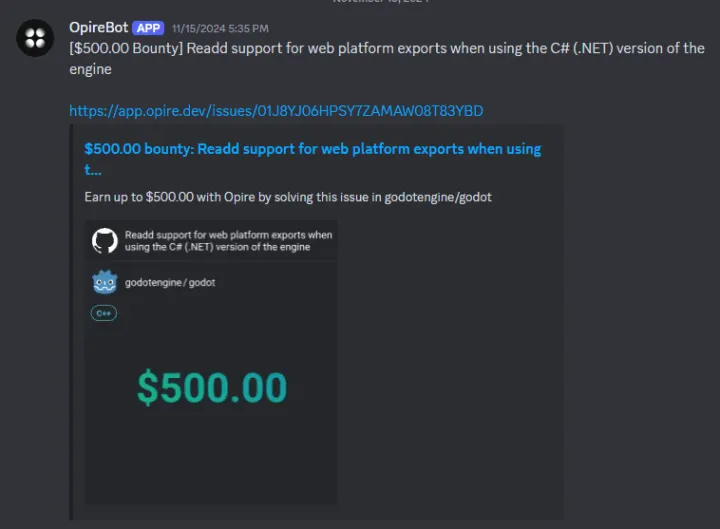
5. Solve open-source bounties. One of the most underrated options, and people often forget it.
If you are a solid programmer, you can earn from $200 to $10,000 from a single pull request.
That is the magic of open-source bounties.
You can find bounties on Opire, which works toward the idea that anyone can make a living from open source.
As a developer you also build a reputation and something for your CV, because you solve real problems people are willing to pay for, and you get better at your craft.
Well-known companies such as Cal.com use bounties to speed up development.
Opire’s recently launched subscriptions are also very rewarding: developers keep 100% of the bounties.
If you don’t know where to start, read their official guide.
By the way, Opire is fully open source, which means more transparency and trust. You can support them by starring their GitHub repository or joining their Discord community!
6. User testing. Companies building production apps rely on user feedback to improve, and that is where user-testing services come in.
You spend 10 to 30 minutes testing a website or app, give feedback or complete a survey, and get paid for it.
It isn’t only for developers, but your technical knowledge gives you an edge: you finish tasks faster, give better feedback and earn more quickly.
Some sites you can work through (each has its own process and requirements):
7. Freelancing. One of the most common ways for developers to earn a sustainable income, though it can be hard and take time and energy.
In my experience it is crowded and competitive, and income can be irregular because finding clients is hard. You need to build a reputation and plan your finances around it.
A lot depends on your field, the platform you use and your experience.
Some well-known platforms for finding developer work:
- Fiverr – a huge platform, great for developers just starting out.
- Upwork – more for experienced developers, with long-term contracts and higher-paying jobs.
- PeoplePerHour – good for the European market, focused on local business connections with a balance of short and long projects.
8. Newsletters. Subscription-based newsletters and RSS feeds.
All you need is some expertise in your field and the ability to write well.
Developers always like to keep up with what’s new, especially when it comes from personal experience.
Popular newsletter platforms worth trying:
9. Open-source grants and programs. Companies and foundations offer grants and sponsorships in areas such as open source, innovation, DeFi and AI. The money mainly covers your living costs for a short time while you work on a specific project.
- Google Summer of Code (GSoC)
- Google Season of Docs
- Gitcoin
- Outreachy
- Mozilla Open Source Support (MOSS)
- NumFOCUS Small Development Grants
10. API as a service. Most developers don’t know about this one: you can earn side income from APIs you build.
Try well-known API marketplaces such as RapidAPI Hub, which lets you publish, manage and monetize APIs.
There are also:
11. Build a paid community.
This is another way to earn well from your experience as a developer (one I plan to work on in the future).
A community where members talk and learn from each other is more valuable. A monthly or yearly subscription helps keep out people who aren’t active or serious.
An example of a site that helps you build your community:
In the end, a side income as a developer can be a turning point in your life, financially and professionally. These options take some effort and patience at first, but once you take the first step, opportunities tend to follow.
What matters is using your skills and experience in different ways, and trying the options that suit you. Every path can open a new door, and who knows? A small experiment might lead to a big success.
I hope at least one of these ideas helps you on your journey. Be bold and take a step!
Have a great day, and see you in the next article! 😊