Negotiation skills: how to raise your rate without losing the client
Many freelancers are torn between charging what their work is worth and keeping the client. Negotiation is how you do both.
Read this article in Arabic
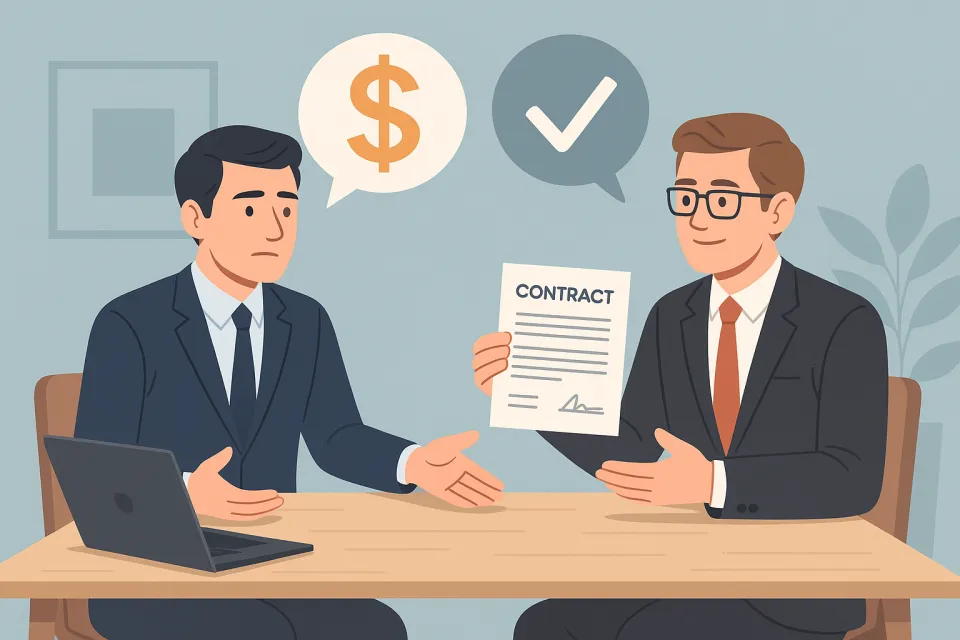
In business, and especially in freelancing, freelancers and company owners face the same recurring challenge: how to negotiate price with clients. A freelancer can be skilled and experienced and still hesitate at the moment of negotiation: ask for more and risk losing the client, or accept less so the opportunity doesn’t slip away? This dilemma leaves many freelancers torn between the real value of their work and what pleases the client. The answer is negotiation skill: it decides whether you earn more and keep the client at the same time, or stay stuck at prices that don’t reflect your level and effort.
Negotiation is a core skill for any freelancer or business owner, because it is how you get a fair price for your experience and effort. When you negotiate well, you don’t only earn more; you also gain your clients’ trust and look like a professional who knows their worth. On the other hand, a developer or designer who accepts any price the client sets looks weak, and may not get enough respect in future dealings. Negotiation isn’t a fight or an argument; it is the art of persuasion and finding a balance between both sides.
Before any negotiation, you need to understand the value of your work. Many people ask for less than they deserve simply because they don’t know how to value their experience. To avoid that, know your years of experience, the kind of projects you have delivered, and the average market rates. A designer with five years of experience shouldn’t charge what a beginner charges. Negotiation starts from strength: knowing your real value gives you confidence when you quote your price.
When it is time to negotiate, prepare the client for the idea of a higher price. Don’t just say you want more money; tie it to the value you will add. For example, instead of “I need to raise my price because the work is tiring”, explain that the new price reflects extra quality or concrete results that will earn them more. Clients usually don’t mind paying if they feel the return is bigger than the investment.
A smart strategy is to raise your price gradually rather than suddenly. With a regular client, you can raise it with each new project or contract renewal, and explain why. It also helps to offer several options, known as pricing packages. For example, a basic offer at a reasonable price, an advanced offer at a higher price with extra features, and a premium offer at a higher price with long-term support. That way the client feels the decision is theirs, and they will often choose the middle or top option.
The core of negotiation is focusing on value, not cost. The client doesn’t care how many hours you spend; they care about the result and what it brings them. If the project will increase their sales or save them a lot of time and effort, they will see your price as fair. So always tie your price to the impact your work will have. For example, if your design for an online store will help them earn tens of thousands of dollars more, paying you a few thousand won’t be a problem.
It also helps to show that you are in demand and have other projects. That doesn’t mean pretending to be busy, but showing that your time is limited makes the client value your work more. Be flexible when needed: if the client rejects the new price, don’t give in immediately. Suggest reducing the scope or dropping some features for the lower price. That way you keep your value and show you can adapt to their needs.
Watch out for common mistakes. Don’t over-justify your price or make personal excuses, and don’t show fear of losing the client; that weakens your position. Never exaggerate or lie about your experience either; honesty is the basis of a long-term relationship. Negotiation isn’t arguing; it is a calm conversation aimed at an agreement that works for both sides.
If a client refuses any increase at all, stay calm. Listen to their view, ask why they object, and offer middle-ground solutions. If you can’t find common ground, step away politely, because accepting an unfair deal can hurt you more in the long run than it helps. A serious client will value your work and may come back even if they decline at first.
Perhaps the best thing about negotiation is that it isn’t a single moment but part of an ongoing relationship. A client who trusts you and sees good results will be ready to pay more in the future without discussion. So always deliver high quality that builds a strong reputation, and stay in touch with clients after projects end. That turns a client from a one-off deal into a long-term partner.
In short, successful negotiation isn’t only about raising your price; it is about convincing the client that the price reflects the real value of your work. Master this skill and you will earn more, keep your clients and build a strong reputation as a professional who knows how to price their work. Remember: the client isn’t buying your time, they are buying the result you deliver.