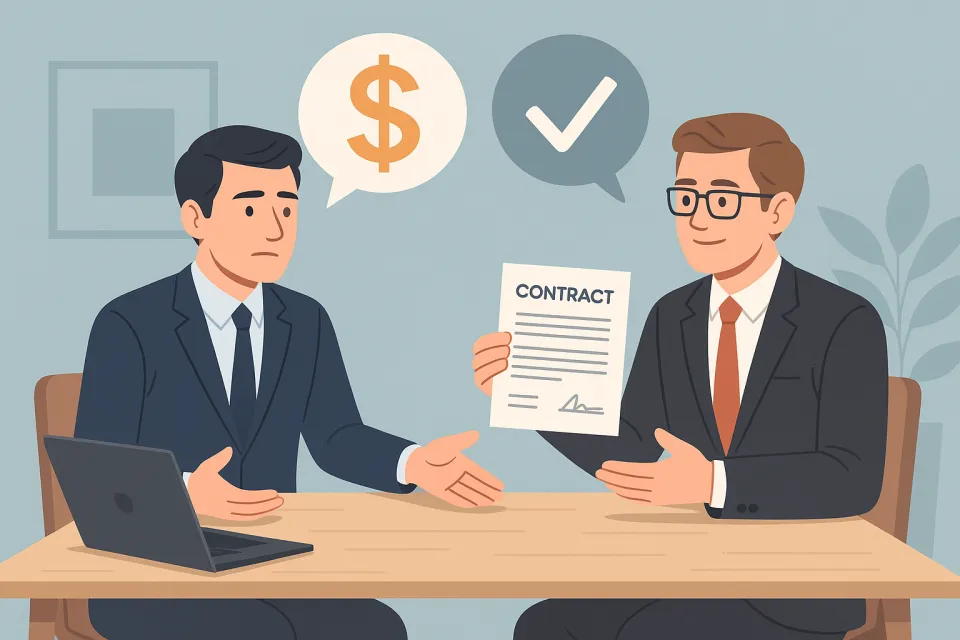
How to write a convincing proposal that makes the client choose you
A strong proposal is the key to winning projects. The essential parts of a winning proposal, with practical examples and professional tips.
Read this article in Arabic
In freelancing, and even inside companies, writing a strong, convincing proposal is the key to winning any project. You may have the skills and experience, but if you don’t present them in a way that attracts the client, the project may go to someone with less experience who simply wrote a better proposal.
In this long article we go through the best practices for writing a proposal that makes the client choose you, with practical examples and professional tips.
1. What is a proposal, and why does it matter?
A proposal is a document or message a freelancer or company sends to a client, explaining:
How they understand the project.
What solutions they propose.
Why they are the right person for the job.
Why it matters:
It is the first impression you leave on the client.
It shows how professional you are.
It helps the client compare proposals and choose the best.
2. The essential parts of a successful proposal
A convincing proposal should include:
A short, engaging personal opening.
A clear understanding of the project’s requirements.
A clear work plan or solution steps.
Your value proposition.
Relevant examples or past experience.
Cost and expected timeline.
A call to action.
3. How to open in a way that grabs the client
The opening is the first thing the client reads, so keep it short and engaging.
Avoid generic lines such as “Hi, I’m interested in your project.”
Make it personal:
Use the client’s name if you know it.
Show your interest in the project directly.
Example:
Hi Mohammed, I read your request for a clothing store. I have worked on similar projects in this field, and I believe I can help you build a professional store that meets your expectations.
4. Show that you understand the project deeply
Clients love freelancers who understand their requirements precisely.
Restate the client’s request in your own words.
Show that you read every detail.
Ask smart questions that show you are thinking deeply.
Example:
I understand you need an easy-to-use mobile app interface for young users, in two languages (Arabic and English). Would you also like social login?
5. Present a clear work plan
After showing you understand, explain how you will handle the project.
Split the work into stages.
Keep the plan organized and clear.
Example:
Stage one: analyze requirements and settle colors and design.
Stage two: build the main interface and connect it to the server.
Stage three: test the app and fix bugs.
Stage four: final delivery and support.
6. Highlight the extra value you bring
The client isn’t only looking for someone to do the job, but for a partner who adds value.
Will you suggest ideas to improve the project?
Will you offer support after delivery?
Do you have experience in the client’s industry?
Example:
Besides building the store, I can help improve the user experience and suggest payment and shipping integrations that suit the local market.
7. Use examples and past experience
Clients trust freelancers with a track record.
Share links to past projects.
Add images or screenshots.
If you don’t have big examples, show personal or practice projects.
Example:
I built a similar online store for a client in Saudi Arabia, and their sales grew 30% after launch. You can see it here: [project link].
8. State cost and timeline clearly
Vague prices and timelines make clients hesitate.
Set a fair price based on your effort and the project’s value.
Explain how you arrived at the price.
Don’t give random numbers.
Example:
The project costs $1,200 over three weeks of work, including design, development and testing.
9. End with a call to action
At the end, encourage the client to reply:
Be polite.
Make the next step feel easy.
Example:
I’d be happy to discuss the details on a short call. When would you like to start?
10. Common mistakes to avoid
Copying and pasting the same proposal to every client.
Writing a long, boring, unorganized text.
Over-promising without proof.
Ignoring spelling and grammar mistakes.
Talking only about yourself instead of the client.
11. How to stand out from the competition
Personalize: tailor each proposal to the client.
Keep it simple: use clear, plain language.
Format it: use headings and clear bullet points.
Be concise: don’t write too much, but don’t cut corners either.
Focus on solutions: show the client how you will save them time and money.
12. Ready-made persuasive lines
“I’ll deliver on time, with a month of free support after launch.”
“I’ll work on this project as if it were my own.”
“I have delivered similar projects with real results, and I can apply the same approach here.”
“My goal is to make your work easier and increase your profits with this solution.”
13. Why will the client choose you?
The client will choose you if you:
Show you understand their project.
Present a clear plan.
Highlight relevant experience.
Offer extra value.
Write a short, organized, convincing proposal.
Summary
Writing a convincing proposal isn’t just a nice extra skill; it is your weapon for winning projects.
A good proposal shortens the distance between you and the client and shows you are the right person to turn the idea into reality.
Always remember:
A convincing proposal doesn’t only describe what you can do. It shows how you will solve the client’s problem and reach their goals.